Gear Up: How to Build a Foot Dom Production Studio at Every Budget Level
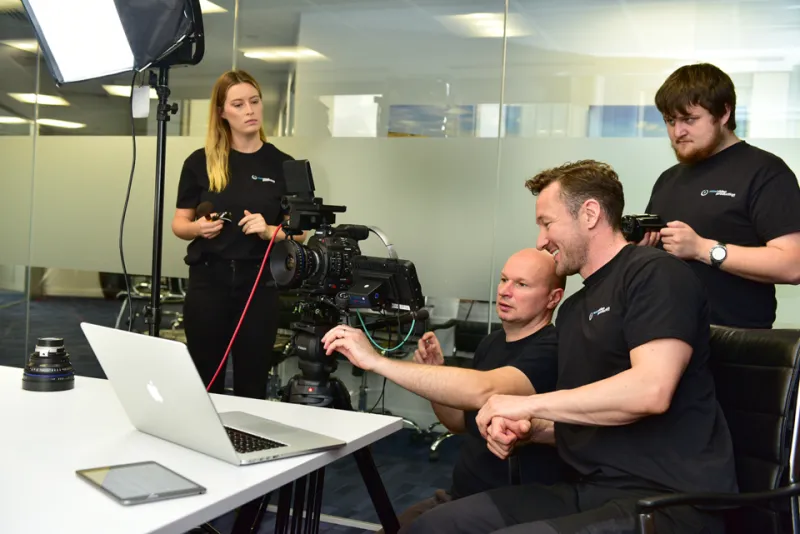
Photo: WOW Video Production, CC BY-SA 4.0, via Wikimedia Commons
Let's be honest: the foot fetish content space is more competitive than it's ever been. Audiences have options, and they've developed a sharp eye for production quality. Shaky footage, muddy audio, and blown-out lighting aren't just aesthetic problems — they're conversion killers. If your content looks like it was shot in someone's bathroom with a 2017 iPhone (no offense to 2017 iPhones), you're leaving real money on the table.
The good news? You don't need a Hollywood budget to produce content that looks genuinely professional. You need a smart budget. There's a difference. This guide breaks down the essential gear categories — cameras, lighting, audio, backgrounds, and accessories — across three realistic spending tiers: entry-level (under $500), mid-range ($500–$2,000), and professional ($2,000+). We also pulled in some candid takes from creators who've been through the upgrade cycle themselves.
Why Production Quality Actually Matters in This Niche
Foot fetish content lives or dies on visual detail. Unlike other adult content categories where narrative or performance might carry a weaker production, foot dom content asks viewers to focus intensely on a very specific subject — texture, color, movement, close-up detail. That means lighting and camera clarity aren't nice-to-haves. They're the product.
"I didn't realize how much money I was losing until I upgraded my camera," says Mara, a creator who's been producing foot content for about three years. "My subscriber retention literally jumped within the first month of posting sharper footage. People could finally see what they were paying for."
That's the ROI conversation worth having. Better gear isn't a vanity purchase — it's a revenue lever.
Entry-Level Setup: Under $500
If you're just getting started or testing the waters, you don't need to go broke building a studio. A focused entry-level investment can get you surprisingly far.
Camera: Your smartphone is more capable than you think, especially anything from the last two or three years. An iPhone 14 or a Samsung Galaxy S22 shoots in 4K and handles macro detail reasonably well. Pair it with a tripod and phone mount (budget around $30–$50 for a decent one from Amazon) and you've got a stable shooting platform.
If you want a dedicated camera without a big spend, the Logitech Brio webcam (~$150) is a popular entry point for creators who shoot at a desk or fixed angle. It's not cinematic, but it's sharp and reliable.
Lighting: This is where entry-level creators often make the biggest mistake — skipping it entirely. Natural light is free but inconsistent. Pick up a ring light (the 18-inch models from Neewer or Lume Cube run $40–$80) and your footage will immediately look more intentional. Ring lights are particularly flattering for close-up foot shots because they reduce harsh shadows.
Background: A simple vinyl backdrop in a neutral color (white, black, or a warm beige) costs around $20–$40 and instantly makes your content look cleaner. Avoid busy patterns or cluttered room backgrounds — they pull focus from your subject.
Total estimated spend: $150–$350
Mid-Range Setup: $500–$2,000
This is where the real quality leap happens. Mid-range gear closes most of the gap between amateur and professional content, and it's where a lot of successful full-time creators land.
Camera: The Sony ZV-E10 (~$600 with a kit lens) is a mirrorless camera that shoots beautiful 4K footage and has excellent autofocus — which matters a lot when you're capturing movement. Its compact size makes it easy to position at unusual angles. The Canon M50 Mark II is another strong option in a similar price range.
For close-up detail shots, invest in a macro lens. The 7artisans 60mm f/2.8 macro runs around $100–$130 and produces stunning detail on skin texture, nail polish, and arch definition. Foot fetish content is all about that detail — a macro lens is arguably the single highest-ROI purchase in this category.
Lighting: Step up to a two-point or three-point lighting kit. Brands like Godox and Neewer offer LED panel kits in the $150–$300 range that give you real control over shadows and highlights. Softboxes diffuse light more naturally than ring lights and work better for full-leg or body-length shots.
Audio: If you're producing any content with voiceover, instruction, or ambient sound, a Rode VideoMicro ($80) or Blue Yeti USB microphone ($130) makes a noticeable difference. Viewers notice bad audio more than almost any other production flaw.
Total estimated spend: $900–$1,600
Professional Setup: $2,000+
At this tier, you're investing in gear that can genuinely compete with mainstream adult production studios. It's a bigger upfront cost, but creators who've made this jump consistently report it as a turning point in their earnings.
Camera: The Sony A7 IV or Canon EOS R6 Mark II are full-frame mirrorless cameras that produce cinematic footage with exceptional low-light performance and color depth. Expect to spend $2,500–$3,500 body-only. These cameras make every shot look deliberate and polished.
Lenses: A dedicated 100mm macro lens (Canon or Sony native mount) gives you optically stunning close-up capability. Budget $400–$700. Pair it with a fast 35mm or 50mm prime for wider establishing shots.
Lighting: Invest in continuous LED panels with color temperature control — the Aputure Amaran series is popular among content creators for its reliability and output. A full kit with stands and modifiers runs $400–$800.
Editing Software: Adobe Premiere Pro or DaVinci Resolve (which has a robust free version) gives you professional-grade color grading and editing control. Learning even basic color correction can transform mid-range footage into something that looks genuinely high-end.
Creator note: "The color grading was the thing nobody told me about," says Devon, a creator with a large subscriber base on multiple platforms. "I had great footage but it looked flat. Once I learned how to do a basic grade in DaVinci, my content started looking like something people would pay premium prices for. Which they did."
Total estimated spend: $3,500–$6,000+
The One Investment Most Creators Skip (And Shouldn't)
Across all budget levels, the most overlooked investment is storage and backup. Losing footage is a nightmare. A couple of WD My Passport external drives (~$60–$80 each) and a basic cloud backup subscription is cheap insurance. Treat your footage library like the business asset it is.
Building Smart, Not Fast
You don't need to hit the professional tier on day one. Most successful creators built their setups incrementally — starting with a phone and a ring light, then reinvesting earnings into better gear as revenue grew. That's not a compromise, that's a smart business model.
The real takeaway here is this: every tier of investment is worth it if you're also investing in understanding how to use what you've got. A $3,000 camera operated badly will still lose to a $600 camera operated well. Learn your gear, study your lighting, and let the content quality speak for itself. Your audience will notice — and your subscriber count will reflect it.