Shots, Rigs, and Reality Bends: How New Tech Is Transforming Foot Dom Production
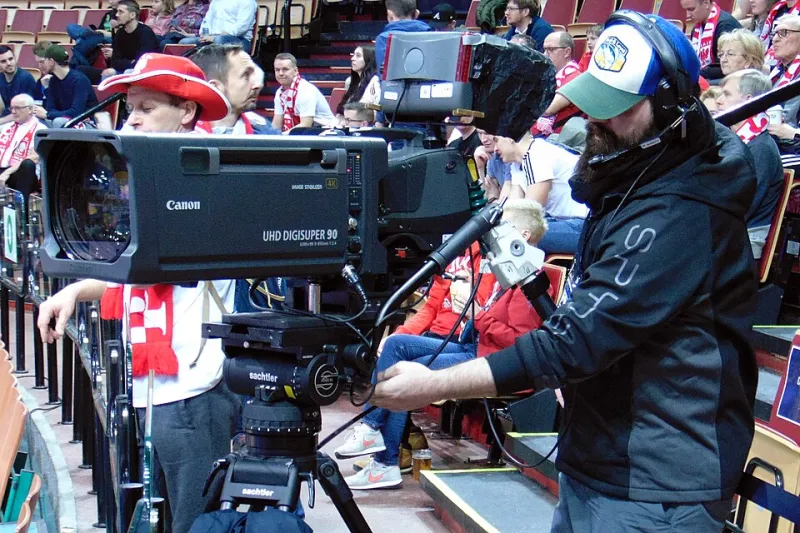
Photo: Zalasem1, CC BY-SA 4.0, via Wikimedia Commons
Not that long ago, a foot dom creator's entire production setup might have been a decent smartphone, a ring light from Amazon, and a spare bedroom with decent carpet. That wasn't a knock — plenty of people built real audiences on exactly that. But the gap between "homemade" and "professional" has been closing fast, and the tools driving that shift are more accessible than most creators realize.
Technology that used to live exclusively in high-end commercial studios is now sitting in Amazon carts and Etsy storefronts. The result? A content landscape where production quality is no longer a gatekeeping factor — it's a creative variable. And foot dom creators, who've always had to be resourceful about how they frame and shoot their work, are running with it.
The Camera Question Has Gotten More Interesting
For foot-focused content specifically, the camera isn't just a camera — it's a perspective tool. Getting close enough to capture texture, detail, and dimension without losing sharpness or introducing ugly distortion is genuinely tricky. That's why the surge in affordable macro and close-focus lenses has been a quiet game-changer for this niche.
Mirrorless cameras from Sony, Fujifilm, and Canon have brought interchangeable lens systems to a price point where working creators can actually afford them. Pair one of those bodies with a dedicated macro lens — something in the 50mm to 100mm range — and you're suddenly pulling detail that a standard kit lens simply cannot touch. The difference shows up immediately on screen: skin texture, nail polish depth, the subtle play of light across an arch. Viewers notice, even if they can't articulate exactly why.
At the budget end, newer flagship smartphones — particularly the iPhone 15 Pro and recent Samsung Galaxy models — have legitimately capable close-focus modes built right in. For creators who aren't ready to invest in a full mirrorless kit, these phones are a reasonable starting point that doesn't require an apology.
Lighting Has Gone From Afterthought to Art Form
Lighting for foot content is its own discipline. You're working with a subject that has pronounced contours, reflective surfaces (think polished nails or oiled skin), and a lot of nuanced shadow play that either works for you or completely against you.
The good news is that the LED panel market has exploded. Bi-color panels with adjustable color temperature have come down significantly in price, and creators are now building two- and three-light setups for under $300 that would have cost serious money five years ago. The ability to dial in warm versus cool tones on the fly — without gels, without guesswork — makes a real difference when you're shooting skin.
More interesting is the growing use of edge lighting and under-lighting rigs specifically designed to emphasize the shape of the foot from below or the side. Some creators are building custom acrylic platforms with built-in LED strips that create a kind of luminous pedestal effect. It looks expensive. A lot of it costs less than $80 in materials.
For creators willing to spend a bit more, parabolic softboxes in the 24- to 36-inch range give you the kind of soft, wrapping light that flatters the subject while keeping detail sharp. These are the same modifiers portrait photographers have used for years — they just hadn't been widely adopted in this corner of the industry until recently.
VR Is Not a Gimmick Anymore
Virtual reality content has had a rocky reputation in adult entertainment — lots of early hype, uneven execution, headsets that made the experience more nauseating than immersive. But the hardware has matured significantly, and the Meta Quest lineup in particular has made standalone VR headsets genuinely mainstream. That shift matters for foot dom creators because the immersive potential of the format is almost uniquely suited to this niche.
Think about what VR actually does: it puts the viewer in a first-person perspective with a sense of physical scale and spatial presence. For foot dom content specifically — where proximity, scale, and perspective are already central to the appeal — that's not a minor upgrade. That's a fundamental change in how the experience lands.
Shooting in 180-degree or 360-degree VR requires a different camera setup (stereoscopic rigs like the Kandao QooCam or the Insta360 EVO are popular entry points), and editing VR footage has its own learning curve. But creators who've made the investment report that VR content commands meaningfully higher subscription rates and drives strong retention. Viewers who've experienced it often don't want to go back to flat video for certain types of content.
Interactive Streaming Is Opening New Revenue Doors
Beyond pre-recorded content, the live streaming side of the industry has gotten more sophisticated. Platforms that support interactive toy integration — where viewer tips or subscriptions trigger real-time responses — have been around in mainstream adult content for a while. But creators are finding increasingly creative ways to apply that interactivity to foot dom experiences specifically.
Live pedicure sessions with viewer-directed choices. Real-time foot care demonstrations where the chat controls the pace. Domination sessions where audience participation is baked into the structure. The technology enabling this isn't particularly complicated — it's mostly a matter of a stable streaming setup, decent lighting (see above), and a platform that supports the interaction layer. What's changed is creator awareness that these tools exist and a growing community of viewers who are actively seeking out that kind of participatory experience.
Twitch-style streaming platforms built specifically for adult content, including some with built-in tipping and request systems, have lowered the barrier considerably. A creator who already has a decent camera and lighting setup is most of the way there.
Budget Tiers Still Matter — But the Floor Has Dropped
None of this means everyone needs to immediately drop several thousand dollars on a full production overhaul. The point is that the distance between entry-level and professional has compressed. A creator working with $200 in equipment and smart technique can produce content that looks genuinely polished. A creator with $1,500 in gear and a good eye can produce content that competes with studios that spent ten times that amount a decade ago.
What technology can't replace is intentionality — knowing what you're trying to create, who you're creating it for, and how each production choice serves that goal. The creators who are winning with new tech aren't just the ones who bought the best gear. They're the ones who understood what the gear could do and built a visual language around it.
The equipment evolution is real. The opportunity for foot dom creators who pay attention to it is just as real. The floor for quality has dropped, the ceiling has risen, and the space in between is wide open.